

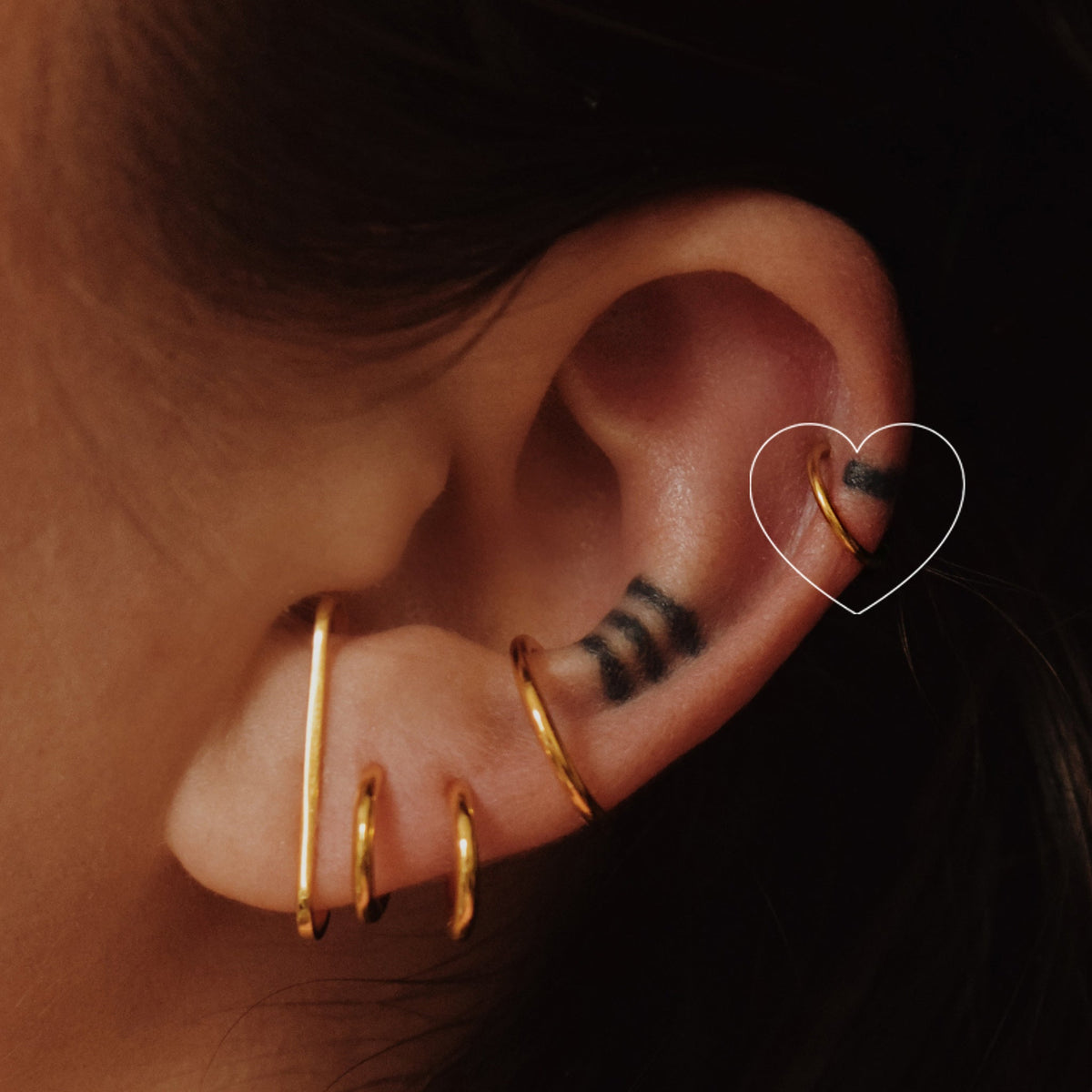
Everything You Need to Know About Helix Piercings
A helix piercing goes through the outer rim of cartilage that curves around the top and back of your ear. It is the most popular cartilage piercing, partly because the rim has room for one, two, or three piercings in a row, and partly because it takes both studs and hoops well.
This guide covers what a helix piercing is, where on the rim it can go, how much it hurts, how long it takes to heal, what gauge and post length you need, and which earrings work best in a helix.
Helix Piercing Fast Facts
- PLACEMENT: Anywhere along the upper cartilage rim of the ear.
- PAIN LEVEL: 4/10. A firm pinch and pressure, over quickly.
- HEALING TIME: About 6 months.
- GAUGE: 16 gauge (1.2mm) is standard. 18 gauge if your piercing has shrunk.
- POST LENGTH: 6mm or 8mm.
- JEWELRY: Solid 14k gold flat backs while healing; titanium flat backs and cartilage hoops once healed.
What Is a Helix Piercing?
The helix is the folded outer rim of cartilage that runs from the top of your ear down the back edge toward the lobe. A helix piercing passes through that rim, usually on its upper curve, and the jewelry sits on the outside of the ear where it is seen mostly in profile.
It is the first cartilage piercing most people get after their lobes, and for good reason. The rim is long enough to hold more than one piercing, the cartilage there is relatively thin, and almost any small earring looks right in it. If you have seen an ear with a neat row of small hoops climbing the top edge, that is a row of helix piercings.
A standard helix piercing is done with a hollow needle at a piercing studio. Don't let anyone pierce cartilage with a gun; the blunt force can shatter the tissue and is a common cause of long, difficult healing.
Helix Piercing Placement: Upper, Mid, Lower, and Forward Helix
"Helix" covers the whole outer rim, so piercers describe where on it the piercing sits:
- Upper helix is the classic spot, high on the curve near the top of the ear. It has the most room and the most jewelry options.
- Mid helix sits halfway down the back edge, roughly level with the opening of the ear. It is a little less visible from the front and a good choice if the top of your ear is thin or already pierced.
- Lower helix is low on the rim, just above where the cartilage meets the lobe. It is sometimes called an auricle piercing; our auricle guide covers it.
- Forward helix is on the short front section of the rim nearest your face, above the tragus. It is a different piercing with its own sizing, covered in our forward helix guide.
A double or triple helix is simply two or three helix piercings in a row along the same rim, usually a few millimeters apart. Many piercers will do two in one sitting; three is often spread across two visits so the ear can cope with the swelling. Matching small hoops or a graduated set of studs is the usual way to wear them.
Which spot suits you depends on the shape of your ear and how it folds. A good piercer will look at your ear and suggest the placement that will heal well and sit straight.
Does a Helix Piercing Hurt?
A helix piercing rates about a 4 out of 10 for pain. Pain is personal, but most people describe it as a sharp pinch with pressure that is over in a second or two. It hurts more than an earlobe, because cartilage is denser and has no fatty tissue to cushion the needle, but less than thicker cartilage spots like the conch or rook. The helix rim is thin and has relatively few nerve endings.
The piercing itself is the easy part. What most people notice is the few days afterward: the rim feels hot and tender, it can look red, and it throbs a little if you bump it. Sleeping on that side is what hurts, not the piercing. That settles within the first week or two.
If you are getting a double or triple helix, expect the second and third to feel sharper than the first, because the ear is already tender. Plenty of people do two in one visit; if you are nervous, there is no harm in splitting them up.
How Long Does a Helix Piercing Take to Heal?
Plan on about 6 months for a helix piercing to heal. That is faster than most cartilage piercings, because the rim is thin, but it is still slow compared with a lobe, which is usually settled in six to eight weeks. Cartilage has less blood flow than lobe tissue, so it repairs itself slowly, and a helix piercing can look fine on the outside while the channel inside is still fragile. Some people take closer to a year, especially with a double or triple helix.
A few things make healing easier:
- Leave the starter jewelry in until your piercer confirms the piercing has healed. Your piercer will usually fit a longer post at first to allow for swelling, then swap it for a shorter one once the swelling goes down. Changing it yourself too early can set healing back.
- Clean it with sterile saline once or twice a day. Don't twist or rotate the jewelry, and don't use alcohol or peroxide.
- Sleep on the other side. Pressure on the rim can cause irritation bumps on a helix. A travel pillow with a hole in the middle helps if you can't keep off it.
- Keep hair, hats, headphones, and glasses arms off it as much as you can, and tie long hair back at night so it doesn't catch.
- Skip swimming in pools, lakes, and the sea until it has healed.
Once your piercer confirms it has healed, you can change the jewelry yourself. A push pin flat back is the easiest style to swap; our guide to changing piercing jewelry walks through it step by step.
Some redness, tenderness, and clear or whitish crust are normal. Increasing pain, heat, swelling, or yellow or green discharge are not; cartilage infections can become serious, so see a healthcare professional rather than waiting it out.
What Gauge Is a Helix Piercing?
Most helix piercings are done with a 16 gauge needle, which is 1.2mm thick. The jewelry you wear should match the gauge you were pierced at so the hole doesn't shrink or stretch. 18 gauge (1.0mm) is the other common size; some piercers use it for the helix. If you are not sure which you have, ask your piercer rather than guessing.
For comparison, a standard lobe piercing is 20 gauge, or about 0.8mm. Lobe earrings are thinner than a helix piercing, so wearing them in your helix lets the channel tighten over time. If your piercing has already shrunk from wearing lobe jewelry, 18 gauge earrings usually fit comfortably again.
Post length matters as much as gauge. Helix jewelry comes in 6mm and 8mm posts. A longer post leaves room for swelling while you heal; once the piercing has settled, most people size down to the shorter post so the back sits flush against the rim. For hoops, the measurement is the inner diameter: most helix piercings take a 6mm to 8mm hoop, with the exact size depending on how far from the edge of the rim you were pierced. Your piercer can measure it in a few seconds.
Not sure what you were pierced with? Ask your piercer, or read our jewelry sizing guide for how to measure what you already own.
The Best Helix Earrings: Hoops, Flat Backs, and Studs
Cartilage hoops are the classic helix look, and a row of small hoops along the rim is the image most people have in mind when they book the piercing. A hoop that hugs the rim closely reads cleaner than a loose one, which is why the inner diameter matters. Save hoops for a fully healed piercing, since they move more than a stud. Our cartilage hoops are sized for the helix and other cartilage spots.
Flat back earrings are the usual choice while a helix heals, and what many people wear in a helix all the time. Instead of a butterfly back, the post ends in a flat disc that sits flush behind the rim, so there is far less to poke the side of your head on a pillow or to catch on hair and headphones. Fit and placement still decide how much contact you get. While your helix is healing, choose solid gold, like our 14k gold flat backs for new piercings. Once it has healed, our titanium push pin flat backs slide in and out without threading, which makes changing them one-handed in a mirror much easier. New to flat backs? Our guide to how to wear flat back earrings explains how they work.
Studs with a butterfly back can be worn in a healed helix, but the clasp sits against the back of the ear and tends to get caught, so most people switch to flat backs once they have tried them.
Whichever style you choose, the metal matters more than the shape. Everything in our helix collection is made from medical-grade (ASTM F-136) titanium or solid 14k gold, both hypoallergenic and nickel-free, so once you have healed you can wear it around the clock, through showers and sleep.
Shop helix piercing jewelry





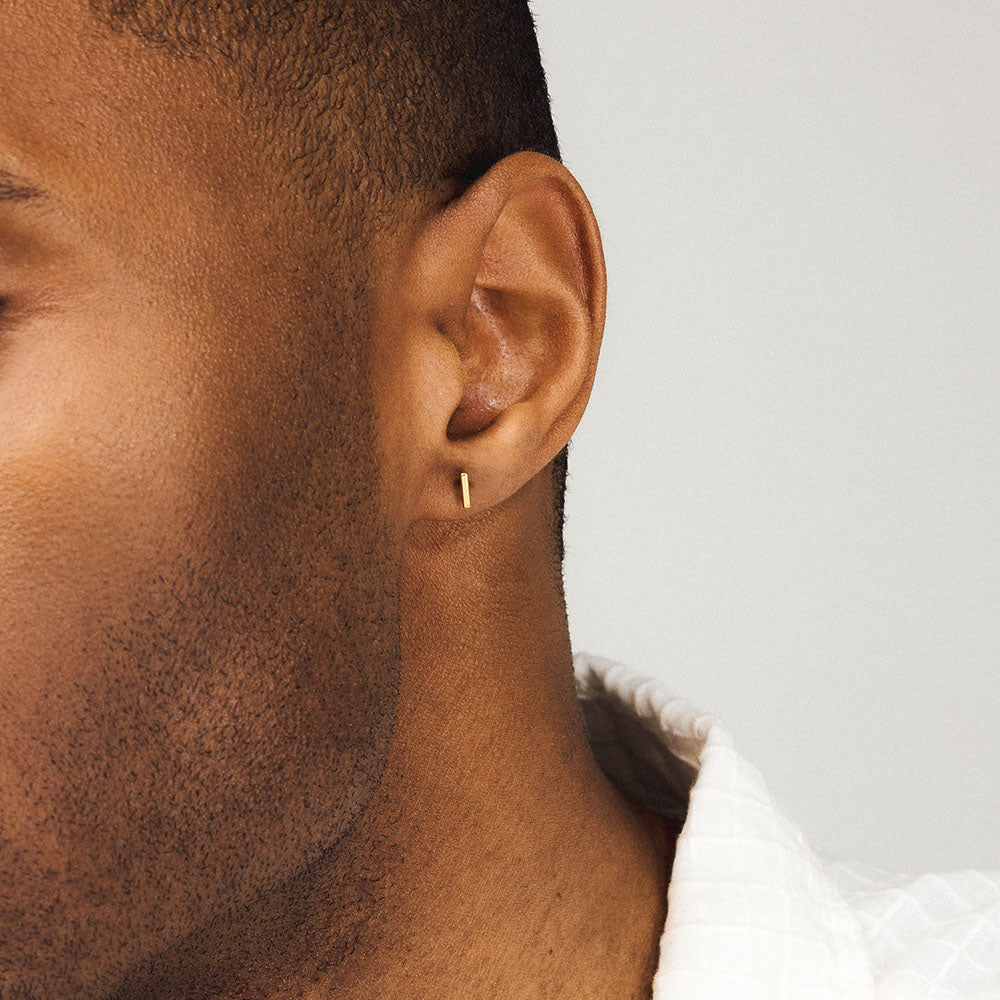
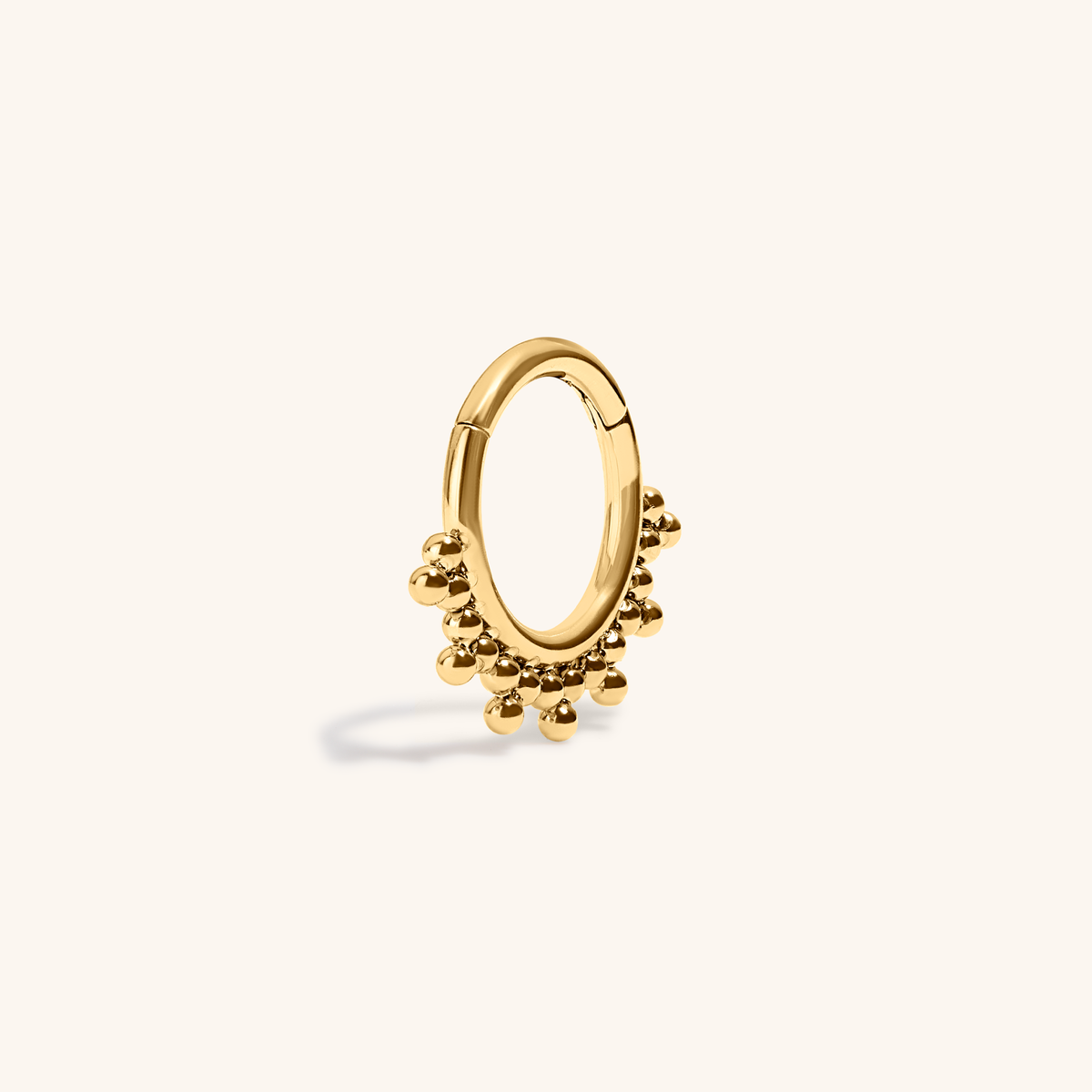
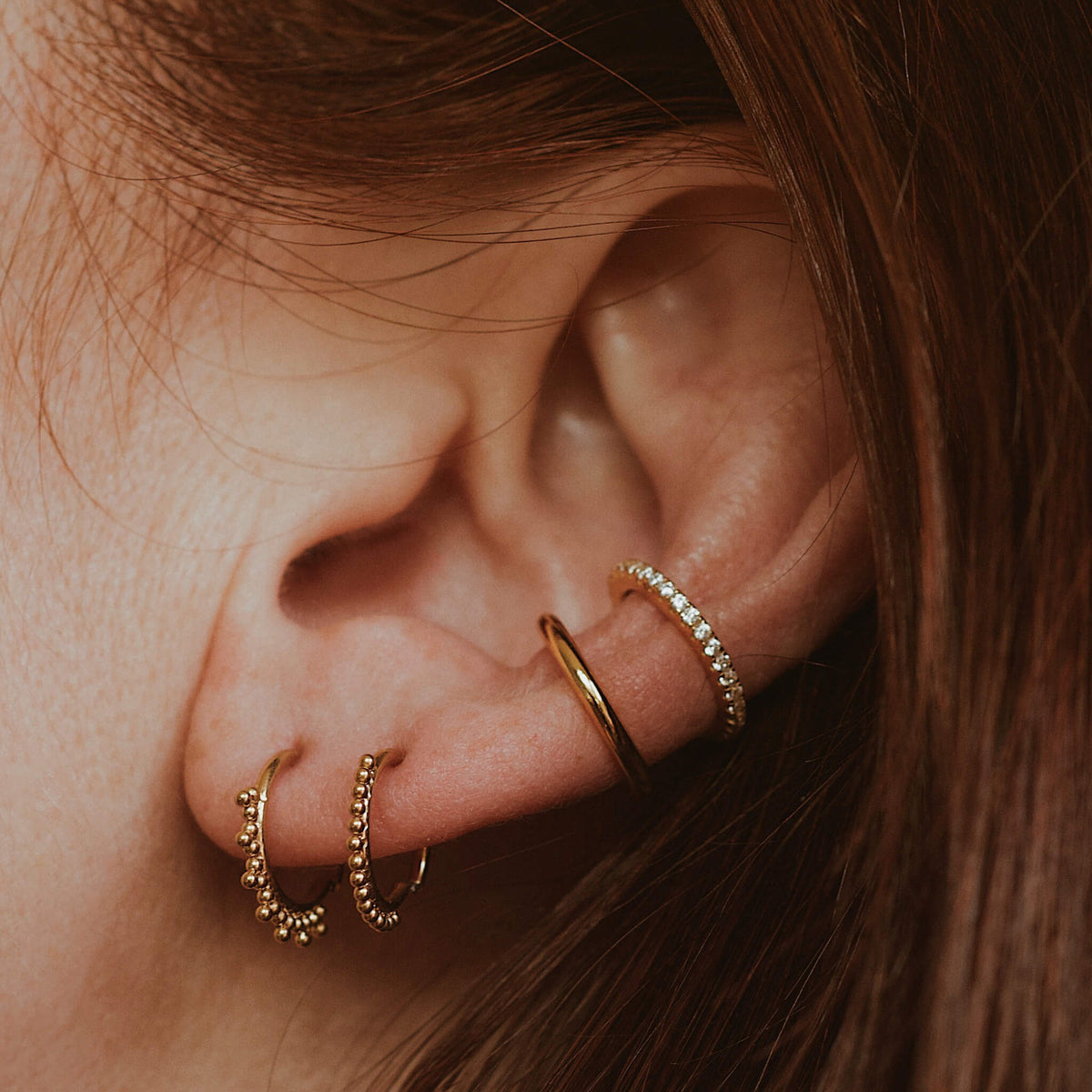

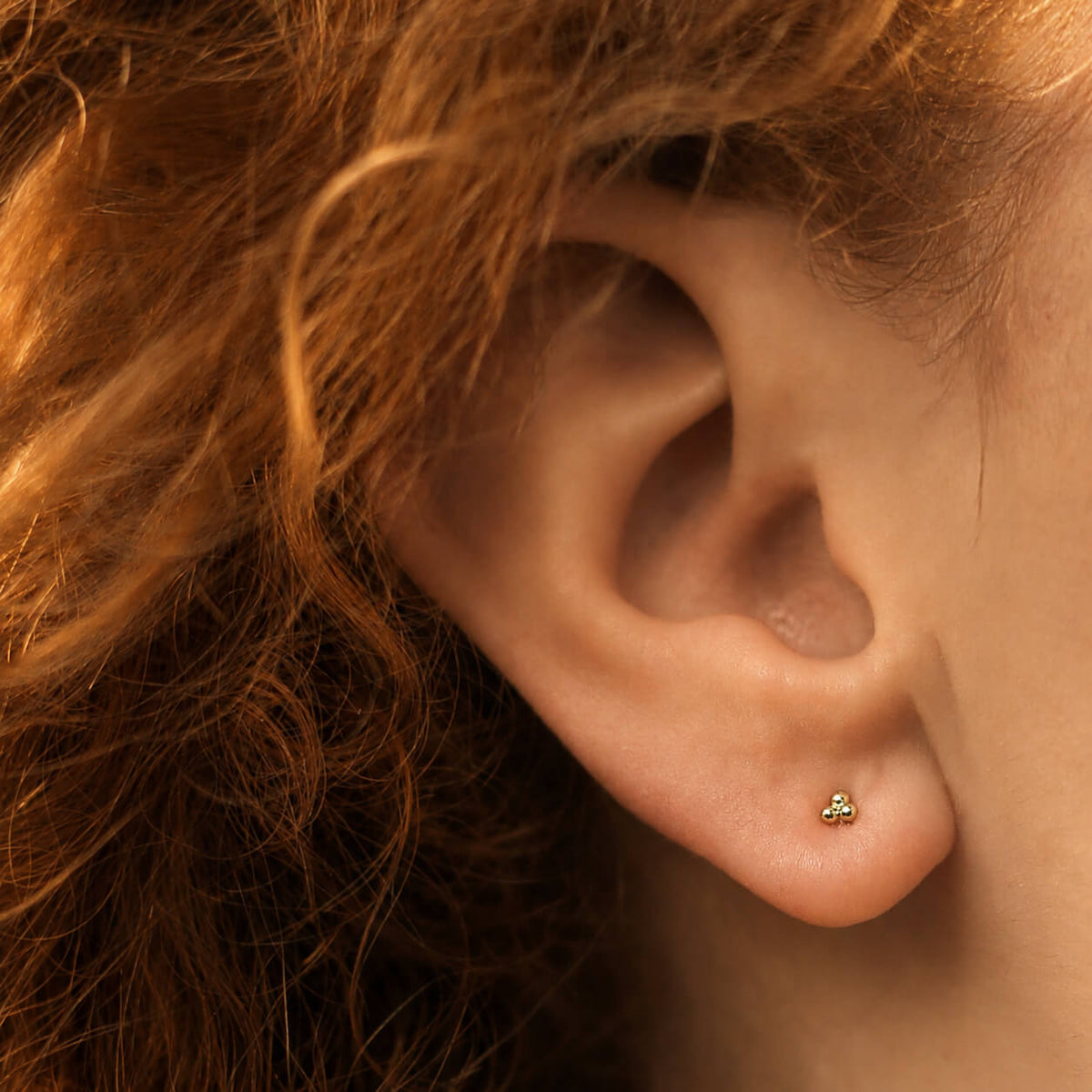
Helix Piercing Inspiration
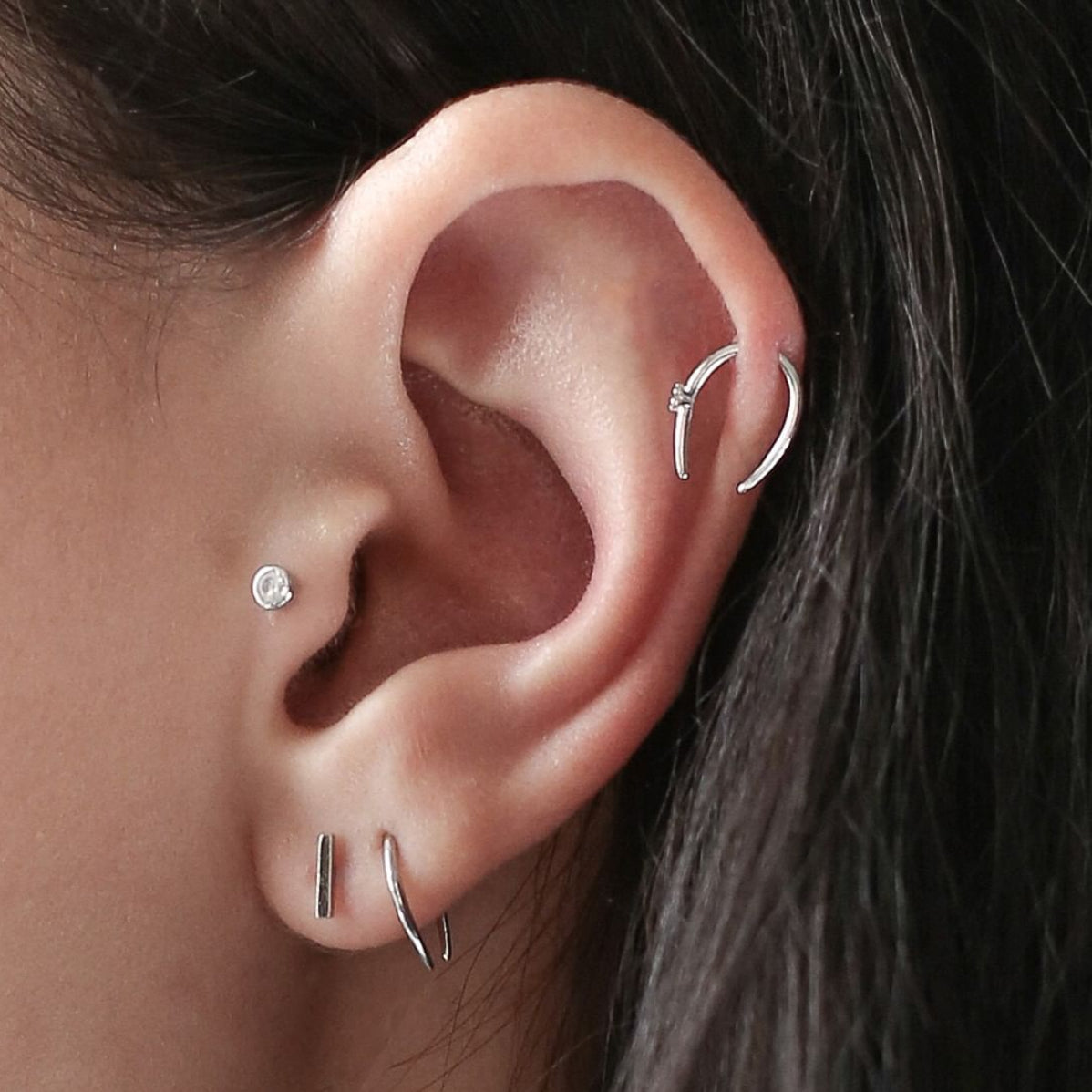
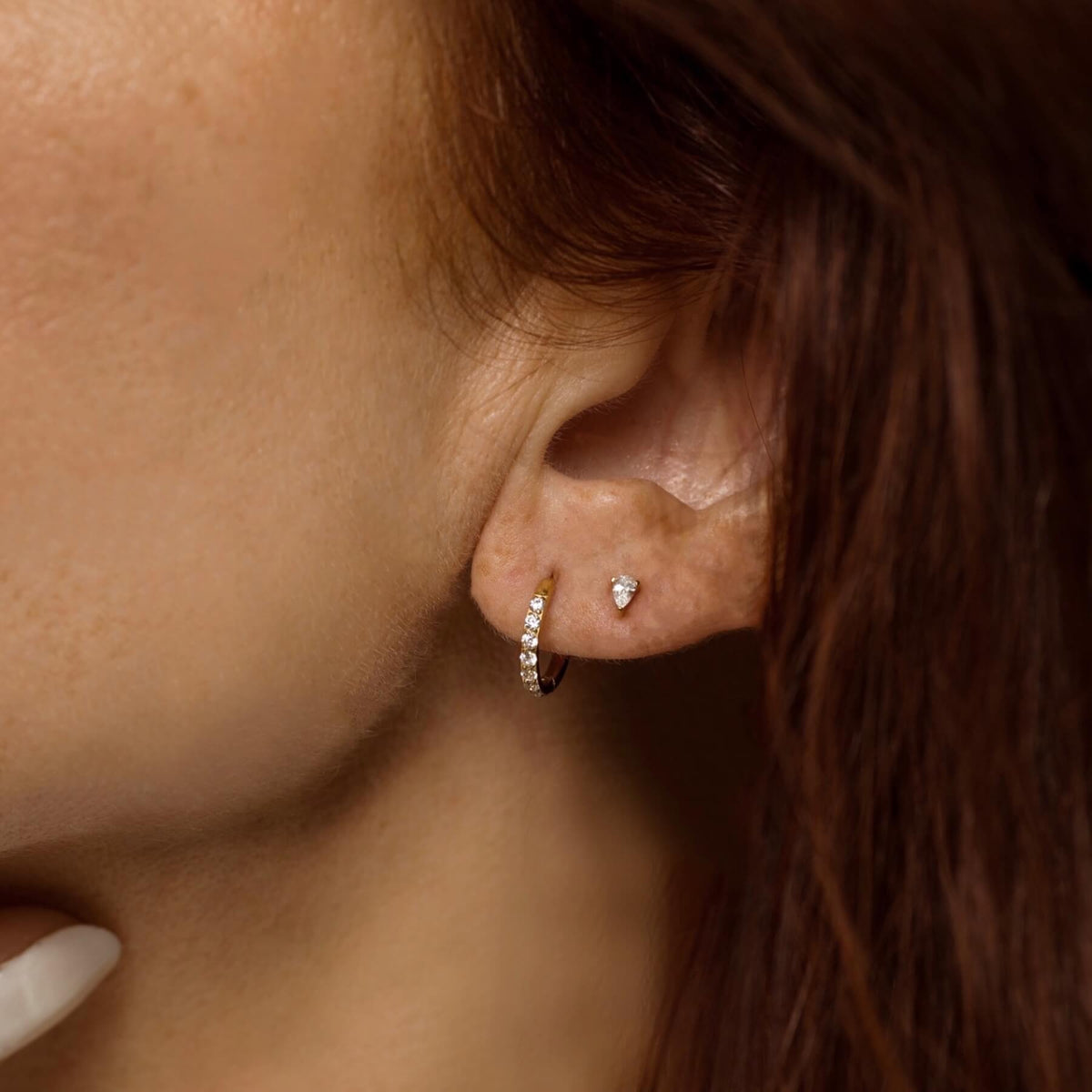
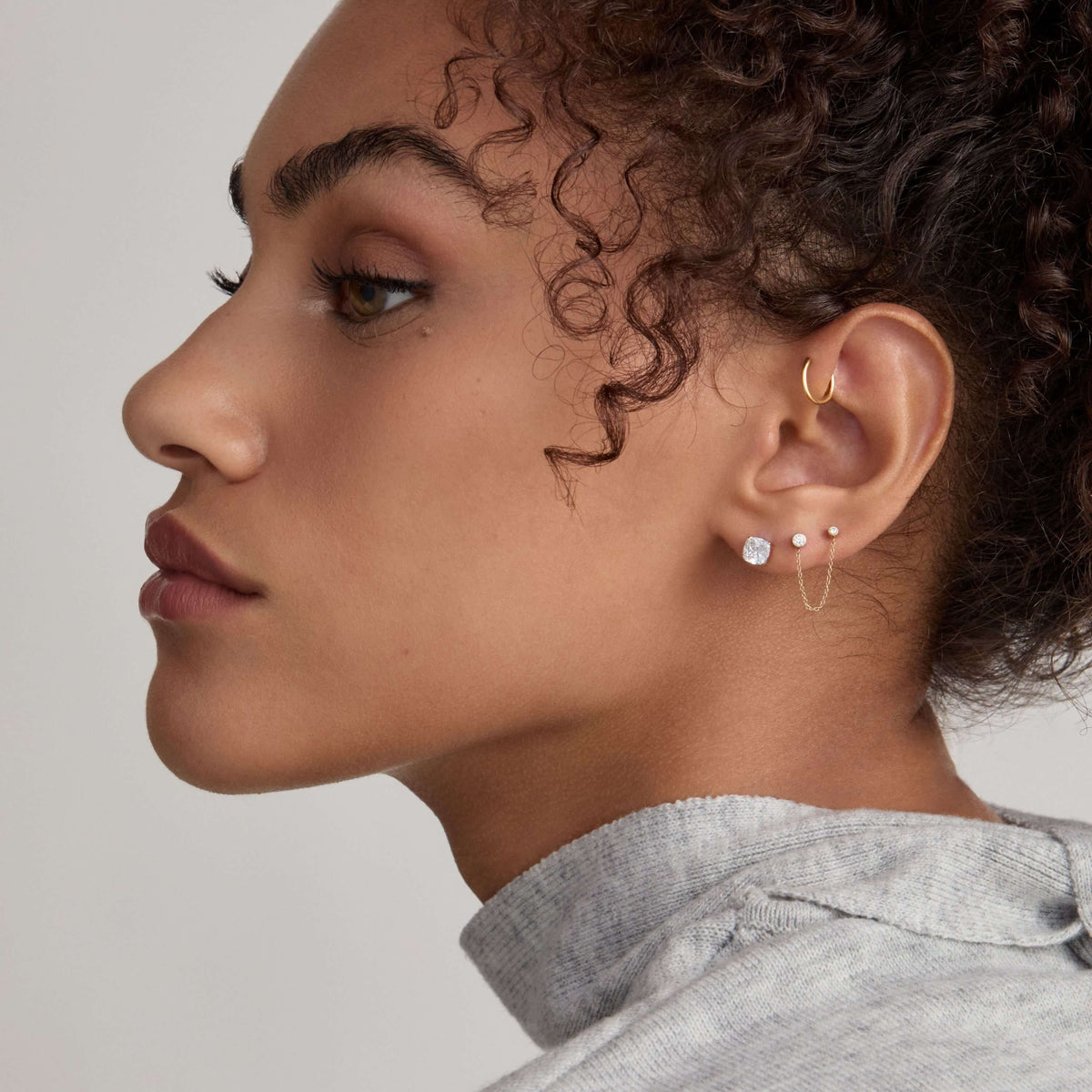
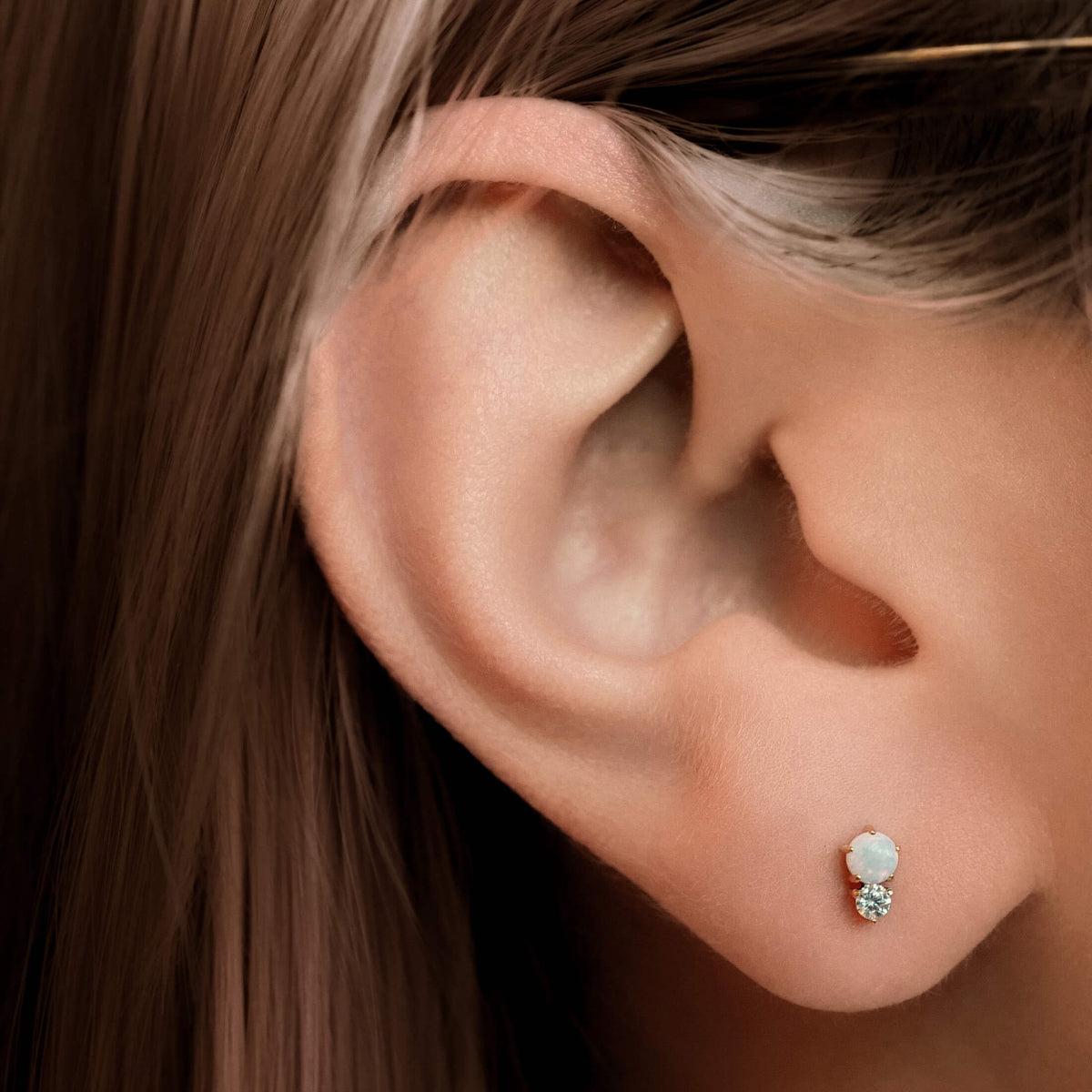
Our Shooting Star Open Hoop, Whisper Open Hoop, Bar Nap Earrings, and Celestial Crystal Bezel Solitaire Nap Earrings
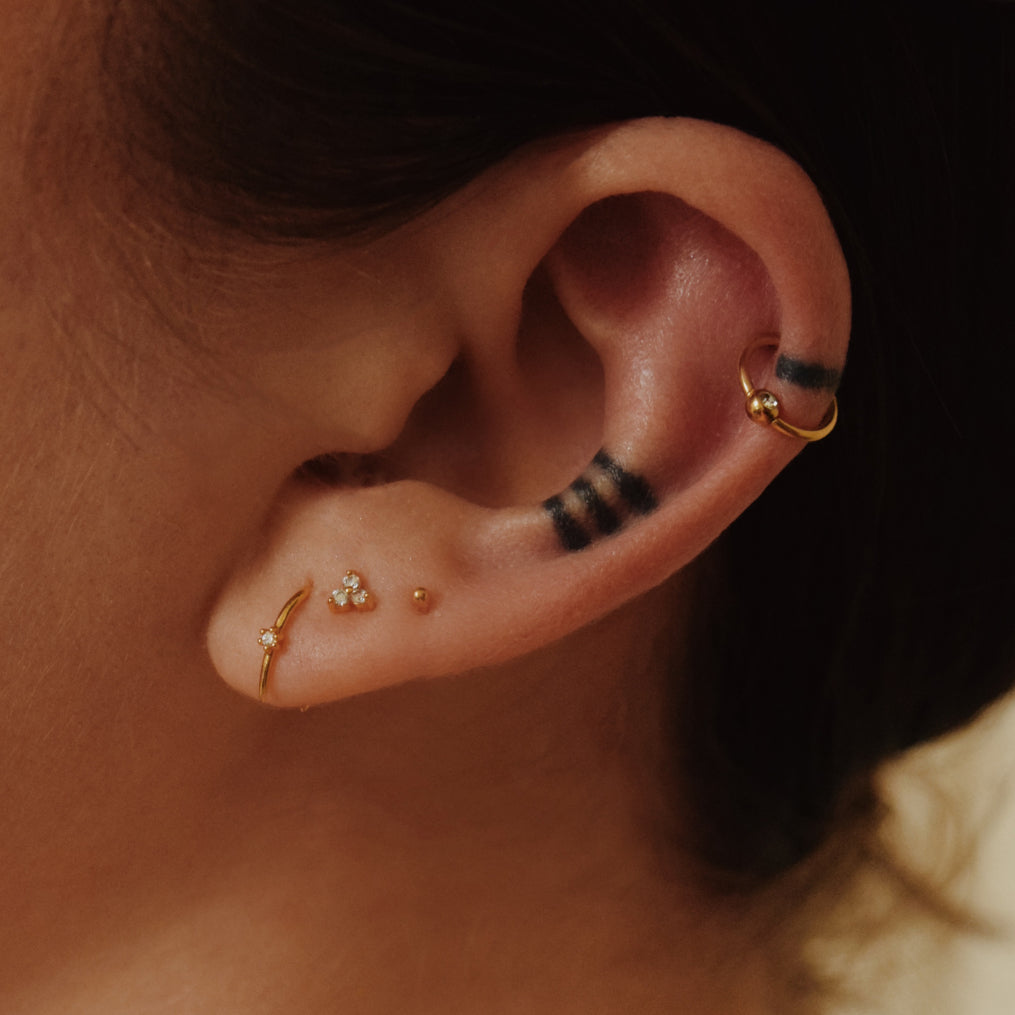
Our Orbital Crystal Cartilage Hoop, Tiny Secret Stud, Crystal Trinity Nap Earrings, and Shooting Star Open Hoop

Our Sphere Push Pin Flat Back, Eternity Ear Cuff, Pear Open Huggie Hoops, and Crystal Orbit Stud
Keep Reading

Forward Helix Piercing Guide: Everything You Need to Know
Everything you need to know about forward helix piercings: pain level, healing time, cost and recommended jewelry.
Read more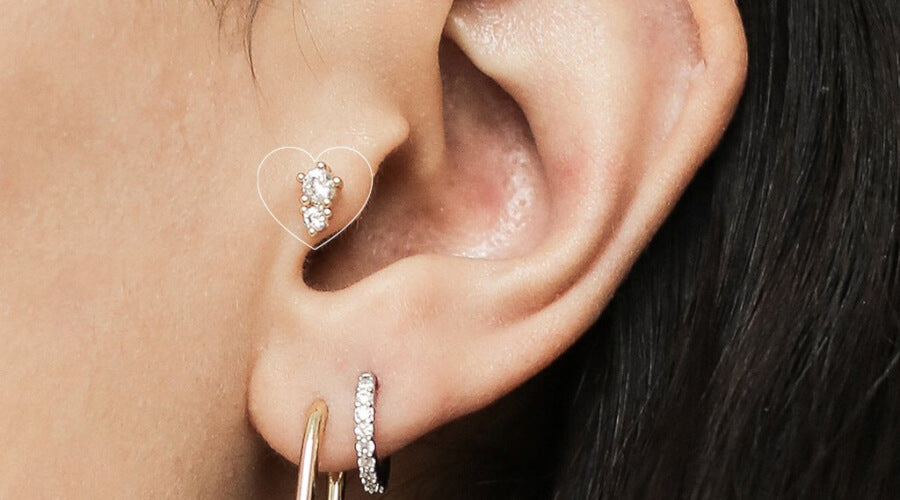
Tragus Piercing Guide: Everything You Need to Know
Everything you need to know about tragus piercings: pain level, healing time, cost and recommended jewelry.
Read more
Conch Piercing Guide: Everything You Need to Know
Everything you need to know about conch piercings: pain level, healing time, cost and recommended jewelry.
Read more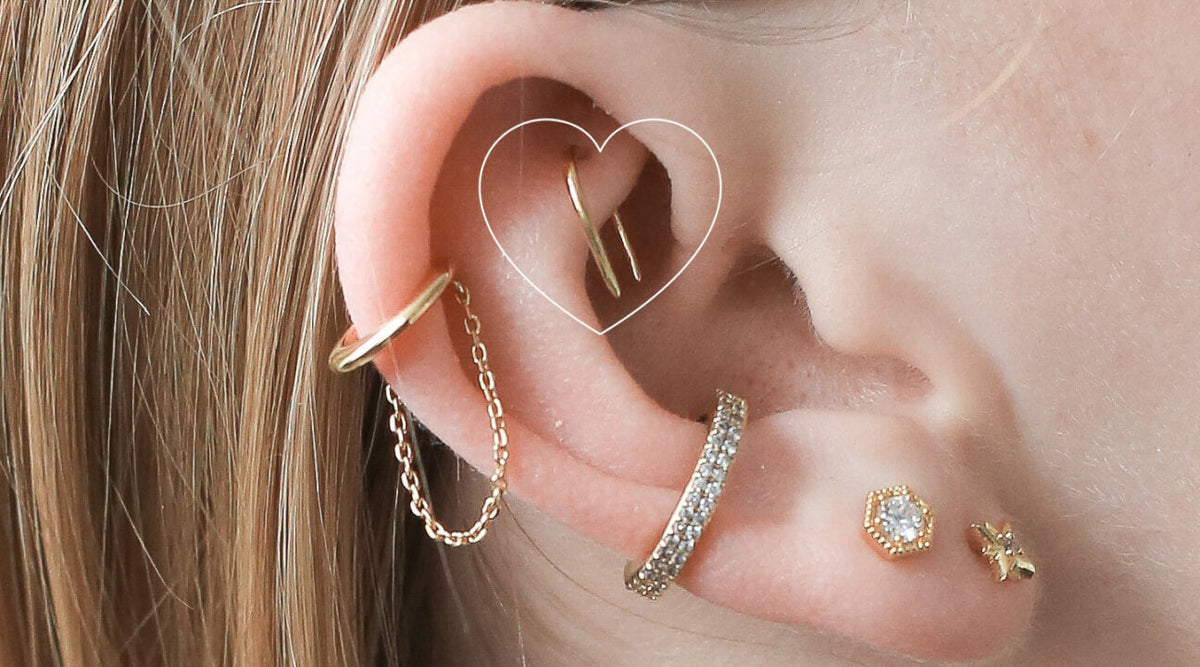
Rook Piercing Guide: Everything You Need to Know
Everything you need to know about rook piercings: pain level, healing time, cost and recommended jewelry.
Read more